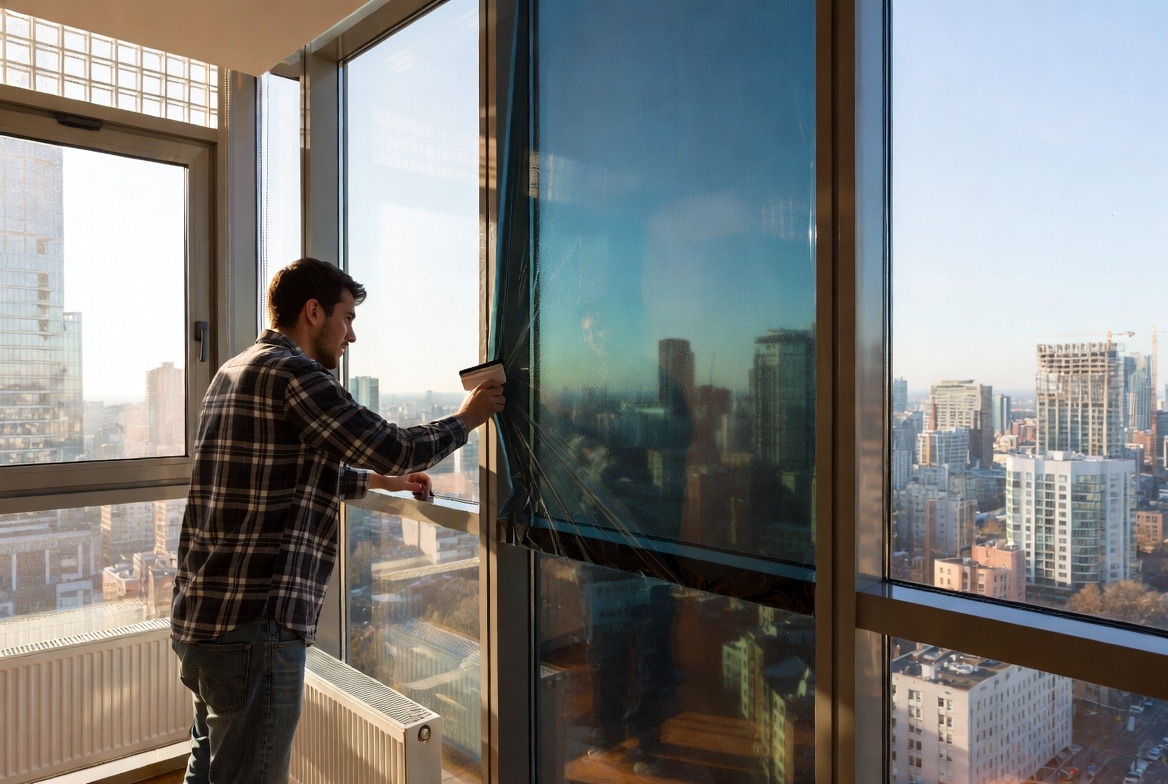
If you are searching for window films in Toronto and the GTA, there is a good chance you want a straight answer to one thing first: how long do window films last? Homeowners ask it. Store owners ask it. Office managers ask it too. People want to know if window films are a smart long-term upgrade or just a short fix that starts peeling after a few hot summers and one rough winter.
The short answer is this: most professionally installed window films last about 10 to 20 years. But that range changes a lot. The film type matters. The glass matters. Sun exposure matters. The install matters a lot more than most people think. In Toronto, that matters even more because our weather keeps changing. One week feels damp and grey. The next feels bright, hot, and full of glare. That kind of shift puts stress on glass and film over time.
This article explains what window films are, why people use them, what affects lifespan, and how to tell when old film is starting to fail. It also keeps the language plain, because most people are not trying to read a lab report after dinner. They just want help that makes sense.
At Tintly Window Films®, we work with homes and businesses across Toronto, North York, Vaughan, Markham, Mississauga, Brampton, Richmond Hill, and nearby areas. We have seen strong window films stay in good shape for years on the right glass. We have also seen bargain film bubble early on sun-heavy windows. Both things happen. So let’s break down what changes the result.
What Are Window Films and Why Do People Keep Choosing Them?
Window films are thin layers added to glass to improve how the glass works. Some window films reduce heat. Some cut glare. Some add privacy. Some help block UV rays that can fade floors, furniture, and displays. Some are thicker safety or security films that help hold broken glass together after impact.
That means window films are not just one thing. They are a group of products with diffrent uses. A frosted film for a clinic door is not trying to do the same job as a solar film on a west-facing condo. A security film on a storefront is not trying to do the same job as a decorative film in an office boardroom.
In Toronto and the GTA, people choose window films for a few common reasons:
- Rooms get too hot in summer
- Sun glare hits TV and computer screens
- Front windows need more daytime privacy
- Furniture and flooring are fading from UV exposure
- Glass needs extra support for safety or break-in concerns
That is why you see window films on so many kinds of buildings. You see them in downtown condos, suburban homes, offices, storefronts, dental clinics, restaurants, and schools. They are popular because they improve existing glass without the cost and mess of full replacement.
That budget angle matters. A lot of owners do not want to rip out windows if the glass and frames are still decent. They just want the room to feel better, look better, or work better. Window films can often do that. Not every time, but a lot of the time, yes.
A simple local example helps here. A homeowner in North York had a front room that felt way too bright from noon to late afternoon. The family kept closing blinds, then hated how dark the room felt. After adding solar window films, they could keep the light but cut down the harsh glare. Nothing dramatic or flashy. It just made the room more livable. That is usualy what people want.
How Long Do Window Films Usually Last in Toronto and the GTA?
Most professionally installed window films last around 10 to 20 years. That is the average range most people can start with. Still, the exact lifespan depends on the type of film and the conditions around it.
Here is a simple guide:
- Solar and heat control window films: often 12 to 18 years
- Privacy and reflective window films: often 10 to 15 years
- Decorative and frosted window films: often 10 to 15 years
- Safety and security window films: often 15 to 20 years or more
Those numbers are not fixed. A shaded office window in downtown Toronto may keep its film longer than a large west-facing family room window in Vaughan. A storefront in Mississauga may get more cleaning, more touch marks, and more stress than a second-floor bedroom in Oakville. Same film family, very diffrent daily life.
One of the biggest reasons window films age at diffrent speeds is sun exposure. West-facing and south-facing glass often takes the hardest hit. The more heat and UV the glass gets, the more pressure it puts on the film and the adhesive. Lower-grade films often start showing haze, bubbling, purple colour shift, or edge lift much earlier.
The quality of the install changes things too. This part gets ignored a bit too often. Even good window films can fail early if the glass was not cleaned well, if dirt got trapped under the film, or if the edges were finished badly. A rushed install can cut years off the life of the film. A clean, careful install can help it last much longer.
Natural Resources Canada explains how solar gain and glazing performance affect comfort and building energy use in Canadian conditions, which helps show why one sunny room can behave very diffrently from another. Natural Resources Canada
We saw this with a small office near Yonge and Sheppard. The west-facing boardroom windows had older solar window films that kept working for close to 15 years. The glass was in good shape, and the install had been done properly. In another case, a DIY job in a Brampton sunroom started peeling much earlier because the film was cheap and the room took hard direct sun every day. Same broad goal, very diffrent result.
What Makes Window Films Last Longer or Wear Out Faster?
The first major factor is the film itself. Better window films use more stable materials, stronger adhesives, and coatings that hold up better over time. Cheap films may look fine right away, then start to go cloudy or purple after a few years. That is why low price alone can be a trap.
The second factor is the condition of the glass. If a window already has seal failure, trapped moisture, scratches, or other surface problems, the film may not bond properly or perform as expected. This comes up in older Toronto homes more than people think. A nice film cannot fix bad glass. It can only work with the surface it is given.
The third factor is sunlight and heat load. Large south-facing or west-facing windows usually put more stress on window films. That is why living rooms, sunrooms, front offices, and storefront display windows often show wear faster than shaded side windows or interior partitions.
The fourth factor is cleaning. Window films do not need fancy daily care, but they do need basic common sense. Soft cloths are good. Mild soap is fine. Ammonia-free cleaners are the safer choice. Razor blades, rough scrubbing pads, and harsh chemical sprays are not a good idea. Repeated rough cleaning can scratch the film or weaken the edges.
The fifth factor is how the space is used. A ground-floor retail window on Queen Street gets touched and cleaned a lot more than a bedroom window in Richmond Hill. A clinic waiting room may deal with daily fingerprints and strong sun at the same time. That kind of real-life use changes how fast window films show age.
ENERGY STAR explains that windows play a major role in heat gain and indoor comfort, which is part of why films on hard-working windows can age faster when the exposure is heavy. ENERGY STAR
Here is one more case study. A beauty clinic in Scarborough had a front waiting area with rough afternoon glare. The staff could feel the heat by 3 p.m., and clients kept shifting seats away from the window. After installing better heat-control window films, the room felt more even and the glare dropped. The staff also followed the care instructions and avoided harsh cleaners. Years later, the film still looked neat. In a nearby plaza unit, another business picked the lowest quote it could find. The film started bubbling near the bottom corners much sooner. Same general area. Same sun. Not the same result.
How Can You Tell When Window Films Need to Be Replaced?
Most failing window films give warning signs before they fully stop doing their job. Bubbling is one of the most obvious signs. A few tiny water pockets can be normal during the curing period after install, but bubbles that show up later often mean the adhesive is breaking down. Once that starts, the issue usualy spreads.
Peeling edges are another clear sign. This often starts at a corner and slowly moves along the frame. It can happen because of age, poor edge finishing, hard sun, or rough cleaning. If you see that edge lift getting worse, the film is likely on the way out.
Colour change is another warning. Older window films may turn purple, yellowish, or hazy as the layers break down. This is common with lower-grade dyed products. When the film looks off, the performance often drops too.
Some problems are less visible. Maybe the room feels hotter again. Maybe the glare is back on screens. Maybe flooring near the window looks like it is getting more sun than before. Those clues matter. Window films can lose performance before they look terrible from across the room.
Scratches and physical wear also matter, especialy on safety and security film. If the film is deeply scratched, cut, or worn near entry glass, it may not help as much during impact. That matters for busy storefronts and main entry doors.
Many people then ask if they should replace the film or replace the full window. If the glass is still in good shape, replacing the film is often the simpler and lower-cost move. Full window replacement usually becomes the bigger issue when the insulated unit has failed, moisture is trapped inside the pane, or the frame itself has real damage.
A good rule is pretty simple. If your window films are over 10 years old, or if you notice bubbling, haze, peeling, fading, or weaker comfort, get them checked. A short site review can save a lot of guesswork.
Are Window Films Still Worth It for Homes and Businesses?
For many Toronto and GTA properties, yes. Window films are still one of the more practical ways to improve existing glass without the cost of replacing the full window system. They can reduce glare, help with heat, support privacy, and improve day-to-day comfort in a way people notice pretty fast.
That matters for condos, offices, retail stores, and homes. A condo owner may want less harsh light without closing blinds all day. A retail shop may want less fading on products near the window. A clinic may want more privacy. An office may want fewer bright reflections on monitors. Window films help with those kinds of normal problems.
They are not a fix for everything. They do not repair cracked frames. They do not solve failed insulated glass units. They do not make old broken windows brand new. But when the glass itself is still serviceable, window films can be a very smart upgrade.
There is also the local experience side. A team that works across Toronto, North York, Mississauga, Brampton, Markham, and Oakville sees how diffrent buildings behave. Lake-facing condos, older detached homes, busy storefronts, and newer offices all have their own patterns. That kind of hands-on work helps you choose better than just reading a box label online.
At Tintly Window Films®, we have worked with property owners across the GTA who just wanted a room to feel better, a storefront to feel safer, or an office to stop blasting glare into people’s eyes by mid-afternoon. When the right film is chosen and installed cleanly, the result usually lasts longer and works better. When corners get cut, people often pay for it later. That part is a bit annoying, but it is true.
If you want help checking older window films or choosing the right film for your home or business, Tintly Window Films® can help with a free quote and a straight answer.
Call Tintly Window Films®
📞 647-847-6365
📧 info@tintly.ca
Leave a Reply