Window films help Toronto and GTA businesses turn plain glass into something useful. They can add a logo, create privacy, show store hours, guide people to the right door, and make a space feel more finished without changing the glass itself. That is why many owners who search for signs or decals end up learning about vinyl sign shop services. If you run a clinic, office, café, salon, gym, or retail shop, the right window films can fix small daily problems that hurt how the space looks and works.
That matters in a region this busy. Statistics Canada says the Toronto CMA stayed above 7 million people in the latest annual estimates, and the City of Toronto’s 2025 Employment Survey recorded 1,623,720 jobs and 74,560 business establishments citywide. For local owners, that means more competition, more glass-front units, and less time to make a strong first impression. Statistics Canada and the Toronto Employment Survey both show how crowded and active the market is.
:contentReference[oaicite:0]{index=0}
So what are vinyl sign shop services, really? In plain words, they are design, cutting, printing, and installation services for films and graphics placed on glass, doors, walls, and other smooth surfaces. For many Toronto and GTA businesses, that means vinyl window film, decorative window film, logo film, frosted privacy bands, door lettering, sale graphics, and wayfinding decals. Some jobs are bold and easy to spot from the sidewalk. Some are quiet, but still do a lot of work every day.
What vinyl sign shop services actually include in the world of window films
When people hear the words “sign shop,” they often think of one thing: a big outside sign. That is part of the work, sure, but it is not the whole thing. A lot of the most useful sign work sits right on the glass you already have. That glass might be a storefront window, a front door, a clinic partition, a boardroom wall, or a reception panel. Vinyl sign shop services use window films and related graphics to make that glass work harder.
The broad term many owners hear first is vinyl window film. This is the main bucket. It includes printed window graphics, cut vinyl lettering, frosted film, patterned film, and solid or semi-clear films used for branding or privacy. Some products are made for short-term promos. Some are made for long-term branding. Some are meant to soften the look of a room. Others are just there to tell people simple things, like where to enter, when you are open, or what services you offer.
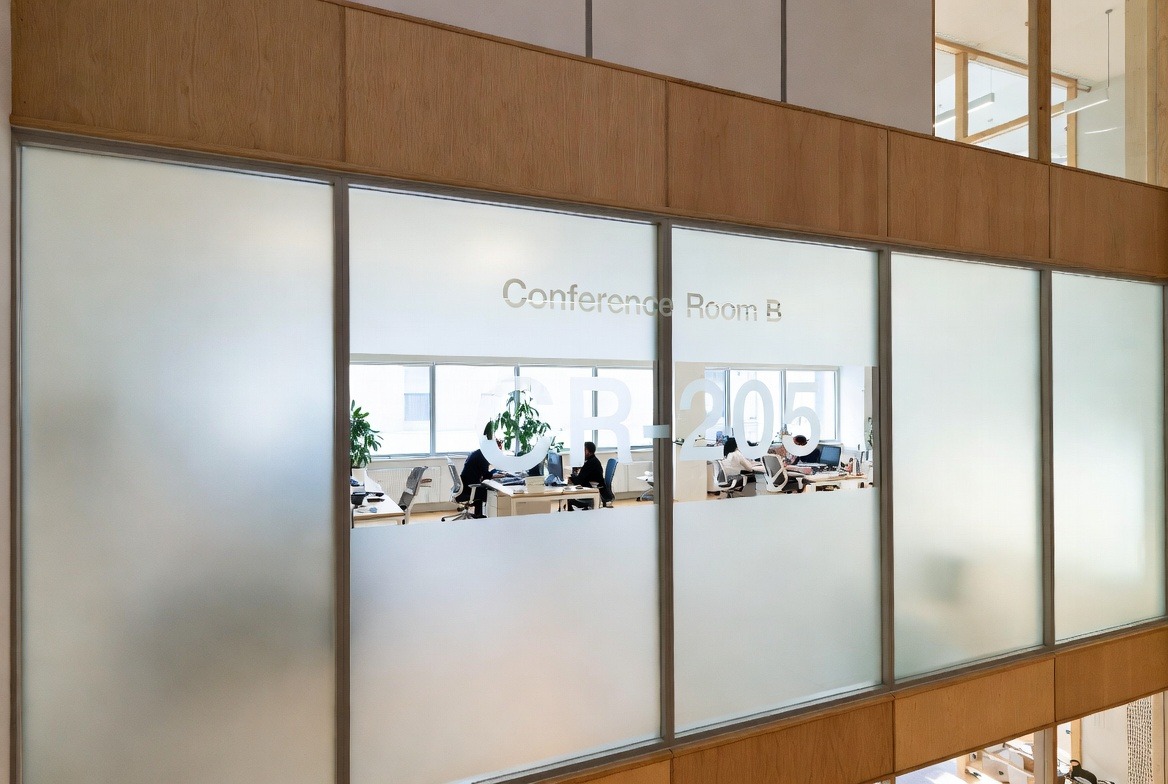
Decorative window film is one of the most common options because it solves two problems at the same time. It changes the look of the glass and adds privacy without blocking all the light. That is why offices, clinics, wellness spaces, and service businesses use it so much. A frosted band across a meeting room window stops the direct view in, but the room still feels bright. A textured pattern on a reception area can make a plain office feel more proffesional. A simple privacy layer on a treatment room door can make clients feel less on display.
Logo film is more direct. It puts a business name, logo, phone number, website, slogan, or opening hours on the glass in a clear way. This sounds basic, but it fixes a real issue. Many businesses do not look fully open until the front glass has some kind of identity on it. A clean logo on the door can make a new unit feel active right away. It also cuts down on the annoying problem where people slow down, stare in, and still ask if you are open.
Most vinyl sign shop services also include work that the customer may not think about at first. The team measures the glass. They check the door swing, handles, frames, and mullions. They look at the height of the film and the reading distance from the sidewalk or parking lot. They think about lighting too. Morning glare can wash out weak graphics. At night, interior lighting can change how privacy film feels from outside. These details are not flashy, but they change the result alot.
This is why the service is bigger than “just putting a sticker on glass.” The point is to give the glass a job. It may need to brand the space, add privacy, or guide people through the unit. Sometimes it needs to do all three. A retail shop might need logo film on the front, a lower privacy panel at the cashier area, and cut vinyl hours on the door. A clinic may need frosted film on exam room glass and soft branding in reception. A law office may need a boardroom band that keeps the room open but less exposed. Same surface, diff rent need.
That is also why vinyl sign shop services fit so well under the bigger topic of window films. They are part of how businesses use glass better. Instead of leaving a pane empty, too open, or hard to read, film turns it into a useful part of the space. It is a small upgrade, but it changes how the place feels to customers and staff every day.
Why Toronto and GTA businesses use window films for privacy, branding, and daily function
Toronto and GTA businesses keep using window films because glass can help a space and annoy people at the same time. It brings in light. It makes a place feel open. It can look clean and modern. But it can also make a room too visible, a storefront too blank, or a front entrance too hard to understand. In a city where people move fast and attention is short, that becomes a problem pretty quick.
The local setting changes how these jobs work. In winter, it gets dark early, and clear glass can make a clinic, office, or studio feel cold and exposed by late afternoon. In summer, strong glare can flatten weak graphics and make details harder to read from the sidewalk. On streets like Queen West, the Danforth, Bloor West, or in busy plazas in Vaughan and Markham, the glass has to communicate fast. If someone has to stop and study your window, you may already be losing them.
Toronto’s business mix also helps explain why this kind of work is common. The City’s 2025 Employment Survey says office jobs make up 50.1% of Toronto employment, and downtown alone had 664,650 jobs in 2025. That means a lot of offices, a lot of glass partitions, and a lot of shared spaces where privacy matters even when people still want natural light.
:contentReference[oaicite:1]{index=1}
One common example looks like this. A physiotherapy clinic near Yonge and Eglinton has clear treatment-room glass facing a shared hall. The owner likes the bright feel, but some patients feel too visible, and first-time visitors walk past the entrance because the front door is almost blank. The fix is not huge. A frosted privacy band goes on the treatment-room glass, and a logo film with simple hours goes on the front door. The space still feels bright, but the clinic feels calmer and easier to find. That is the kind of change owners notice every day, even if it is not dramatic.
Another example is a bakery in the east end. The corner unit has lots of glass, which looks nice from inside, but from outside people cannot tell if it is a bakery, a café, or a private prep space. Staff also feel a bit too exposed in winter evenings when the inside lights are on and the street is dark. A lower-panel film, a clean logo, and clear door lettering solve both problems. The branding becomes easy to read, and the inside feels less on display. Nothing about that is fancy. It is just useful.
Window films also help inside the unit, not just on the front. Many Toronto offices use interior glass walls for meeting rooms, shared offices, and reception zones. That looks sharp, but it can make private talks feel awkward. It can also make quiet work harder because everyone feels seen all the time. Decorative or frosted film can fix that without turning the room into a dark box. That is why you see this work in offices, coworking spaces, salons, clinics, gyms, and service businesses across Toronto, Mississauga, Brampton, Richmond Hill, and Scarborough.
Another reason businesses use film is that it is easier to update later. Full glass replacement costs more, takes longer, and creates more mess. Film is usually faster and simpler. If the branding changes, the graphics can change too. If the unit gets a new tenant, the film can come off. If the business wants to test a new look, it can do that without tearing the whole front apart. For leased commercial space, that matters a lot.
So when an owner asks, “Do I really need this?” the answer is not always yes. But if the glass feels blank, too open, or not very useful, window films often solve the problem in a very direct way. They do not have to scream. They just have to work.
How to choose the right vinyl sign shop service and avoid weak installs
If you are hiring for this kind of work, start with the problem, not the product. Ask what the glass needs to do each day. Does it need to add privacy? Improve branding? Make the entrance easier to spot? Show hours or services more clearly? Once the goal is clear, the film choice gets much easier. When the goal is vague, the job can end up looking random or half planned.
A good provider will ask useful questions before they start making anything. They will measure the site. They will check the layout of the glass. They will ask where people first look when they walk up to the unit. They may ask how much glare hits the window, how close the sidewalk is, and whether building access has rules. In downtown towers, for exampel, elevator bookings and access windows can shape the install schedule. In plaza units, the bigger issue may be reading distance from the parking lot, not foot traffic.
It also helps if the same team handles both design and installation. A logo can look fine on a screen, then fail on the real door because the handle cuts through the text. A frost band can sit too high or too low. A phone number can be too small to read from outside. A team that works on real glass every week tends to catch those problems early. That is often the diff rence between a result that feels clean and one that feels rushed.
Ask what material they plan to use and why. Printed film, cut vinyl lettering, frosted film, and privacy film are not the same. The installer should be able to explain the choice in plain language. If they cannot explain it simply, that is not a great sign. Good film work is not about sounding technical. It is about matching the material to the need.
You should also ask about removal and upkeep. Many businesses change branding, hours, or promos later on. Some units change tenants. Some owners test a concept, then adjust it a few months later. Film can work well with that kind of change, but only if the plan allows for it. Ask how easy it is to remove or replace the graphics and what kind of cleaning is safe after install. Those little details save trouble later.
These are good signs when choosing a provider:
- They measure before final pricing.
- They ask what problem the glass needs to solve.
- They explain film choices in simple words.
- They show a layout based on the real glass size.
- They talk about reading distance, privacy level, and light.
- They can combine branding film and privacy film in one job.
Local experience matters too. A downtown storefront near Union Station has diff rent viewing patterns than a clinic in Markham or a service unit in Mississauga. Traffic, glare, parking, and building rules all change the job. A provider who works across Toronto and the GTA is more likely to spot those issues before they become your problem. That does not sound exciting, but it usually leads to better work.
At the end of the day, strong vinyl sign shop service is about making the glass useful. It is not about loading the window with too much stuff. It is about putting the right message, privacy level, and design in the right place. When that happens, the business looks easier to trust, easier to read, and easier to use.
Final thoughts
Vinyl sign shop services make more sense when you think of them as glass-use services, not just sign services. They help businesses use windows and doors for branding, privacy, and simple day-to-day function. For Toronto and GTA owners, that usually means a smart mix of logo film, decorative film, and vinyl window film that solves real problems without turning the job into a big renovation.
If your glass feels blank, too exposed, or hard to read, start there. Think about what the window needs to do each day. Then choose window films that fit that job. Done right, the result is not flashy. It is just clearer, calmer, and more useful.
::contentReference[oaicite:2]{index=2}
Leave a Reply