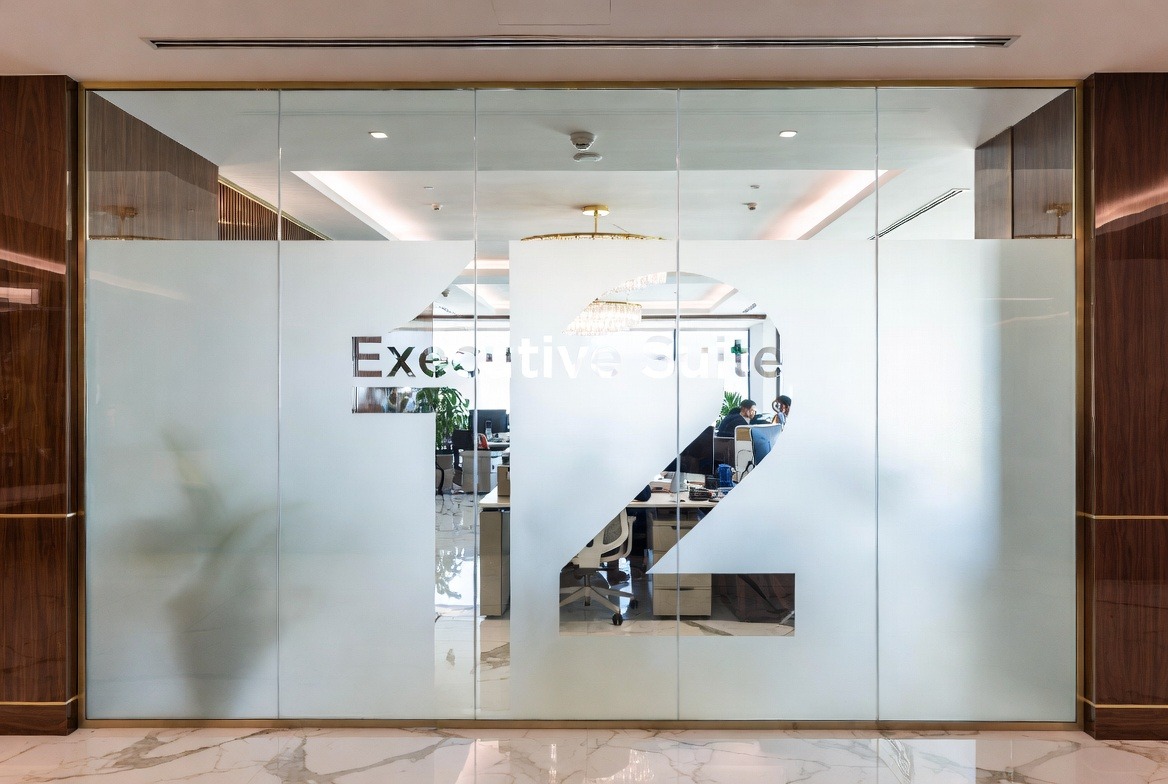
Window films can help a business do more than add privacy or style. They can also guide people, label glass, mark doors, show logos, and make a space easier to use. In Toronto and the GTA, that matters a lot. People move fast. They come in from the TTC, from parking garages, from condo towers, and from busy sidewalks. If your entrance is hard to spot or your pickup area is not clear, customers get confused pretty fast. That is why many local owners now use window films for wayfinding and signage, not just for looks.
Here is the simple answer. Window films for wayfinding and signage are films, frosted bands, vinyl graphics, and logo elements placed on glass to tell people where to go and what to do. They can show your business name, hours, suite number, reception area, arrows, pickup labels, push or pull notes, room names, and safety markers. Some are decorative. Some are mostly practical. The best ones do both jobs at once.
That is one reason many businesses first ask about decorative window film and then realise it can also help with direction and visibility. A frosted strip on a glass wall can add privacy, but it can also mark a room name. A logo on a front door can help people know they found the right place. A small arrow can stop customers from opening the wrong door. These are small fixes, but they save time and lower front-desk stress.
Toronto is full of glass-heavy spaces. You see it in clinics in North York, offices near Union Station, condo retail in Liberty Village, restaurants in Etobicoke, and shops in Markham and Vaughan. Plain glass looks modern, but it often reads badly from a sidewalk or lobby. The TTC’s 2024 operating statistics show just how much daily movement the city handles, with total annual boardings listed at 800,212,000. That much movement means clear signs matter. You can see that data on the TTC operating statistics page.
Another reason window films fit this job well is accessibility. Businesses need communication that is easy to notice and easy to follow. Ontario’s accessibility guidance for businesses points to practical things like larger font on signs and clearer information for people with low vision. Window films can support that by placing short, readable words right on the glass where people already look. You can review that guidance on Ontario’s page about accessibility in Ontario for businesses.
Why window films work so well for wayfinding on glass
Most customers do not say, “Your wayfinding system is weak.” They just hesitate. They stop at the wrong panel. They walk to the wrong side of the counter. They stand outside a glass room and wait, not sure if they should go in. These are little problems, but they stack up. They waste staff time. They slow service. They make the visit feel less smooth than it should.
Window films help because glass is already in the right place. It is at the entrance. It is at the partition. It is on the boardroom wall. It is at the pickup door. Instead of adding more random signs nearby, you can use the glass itself as the message surface. That usually looks cleaner and works faster.
A simple setup might include the business name on the main entry, store hours at eye level, a frosted band across a meeting room, and a short arrow pointing to reception. That does not sound like much, but it often fixes the most annoying customer questions. “Is this the right door?” “Do I wait here?” “Where do I pick up?” “Which room is this?” The glass starts answering before staff have to.
Window films also work because they are flexible. A printed logo can handle branding. A frosted film can add privacy. Cut vinyl letters can show short directions. Safety bands can make clear doors easier to see. One business may only need a door label and hours. Another may need a front logo, suite number, pickup marking, boardroom labels, and privacy strips. Same product family, very diffrent uses.
This is common in Toronto because so many businesses operate in shared or fast-moving spaces. A person might step out of a tower concourse, rush in from Queen Street, or park in a plaza and scan three glass fronts in ten seconds. If your glass says nothing, that person has to guess. If your glass says just enough, the visit gets easier right away.
One local example comes from a small physiotherapy clinic near St. Clair West. The clinic had a glass front with two panels that looked almost the same from the sidewalk. New patients kept pulling the fixed panel instead of the real door. The clinic added a frosted band, a clear clinic name, and a small “Entrance” label. They also marked the reception desk direction inside. Staff said they stopped repeating the same first-minute direction over and over. Small change. Better flow.
Another example came from a quick-service food spot near Vaughan Metropolitan Centre. Delivery drivers, dine-in guests, and pickup customers kept crowding the same entrance zone. The owner used window films to label “Order,” “Pickup,” and “Delivery Pickup” on the glass and on the interior partition near the counter. That cleaned up the rush-hour mess more than expected. No extra staff. No rebuild. Just better glass messaging.
What types of window films businesses use for signage and direction
Not every window film used for wayfinding looks the same. Some are bold. Some are very quiet. The right one depends on what the space needs most.
Frosted films are common in clinics, law offices, schools, salons, and office suites. They cut direct sightlines and add privacy without making a room feel shut in. They are also great for labels. A frosted band can carry a room name, number, arrow, or short instruction and still look neat.
Cut vinyl lettering is often the simplest choice. It works well for hours, suite numbers, door instructions, and room names. If the message is short and the glass already has enough visual contrast, this can be plenty.
Printed graphics are useful when branding plays a bigger role. Retail shops, gyms, restaurants, and storefront services often use printed logos, icons, promotional text, or larger graphic panels on the front glass. These can still help with wayfinding when the layout is clean.
Safety markers matter too. Very clear doors can be easy to miss, especially in bright light or busy interiors. A band, dot pattern, or branded strip can make the glass more visible. That helps visitors, staff, kids, and older adults. It also makes the space feel more intentional and less awkward.
The best results usually come from mixing film types in a sensible way. A front door might use a logo and hours. A side glass panel might carry a frosted privacy band. A meeting room might use frosted film with a room label. A pickup area might use plain vinyl letters. If every pane tries to do too much, the place starts looking noisy. If each pane does one clear job, the whole business feels easier to read.
That is why “more signage” is not the real goal. Better placement is. Good window films tell people only what they need at the moment they need it. The sidewalk needs the business name and entrance. The lobby turn needs reception or suite direction. The glass room needs a label and maybe a privacy strip. Short message. Right location. That is what makes it work.
How Toronto businesses should plan window films before installation
The best film job starts with a few plain questions. Where do people come from first? What do they see from the sidewalk or parking lot? Which door do they get wrong? What question does staff answer every day? Those answers matter more than fancy mockups.
A good wayfinding plan usually includes these basic pieces:
- Main entry ID with the business name, logo, and the correct door
- Short direction cues like Reception, Pickup, Suite 210, or Main Entrance
- Privacy markers where people should not have a full view into rooms
- Safety visibility for clear doors and partitions
- Consistent layout so the glass feels like part of the brand, not random stickers
The first mistake is using too many words. Glass is not a brochure. People scan it while walking, carrying bags, checking phones, or thinking about the appointment they might already be late for. Short words work better. “Reception” works. “Please proceed to the reception desk located inside” does not. Clear beats clever almost every time.
The second mistake is poor placement. A label may look nice in a proof, then disappear in glare. A logo may sit too low. A suite number may be blocked by a door frame. This happens alot in west-facing storefronts and bright office lobbies. The film has to be tested from real angles: sidewalk, curb, hall, elevator, and waiting area.
The third mistake is weak contrast. Pale text on bright glass can vanish. Thin letters can be hard to read from six feet away. In Toronto winters, foggy glasses and darker afternoons make that even worse. In summer, glare and strong reflections do the same. Good contrast matters more than people think.
Material choice matters as well. Frosted film works very well in offices and treatment spaces. Simple vinyl letters are good for short labels. Printed films help with storefront identity. A mix is normal, but the mix should feel calm. Too many styles on one pane can look messy pretty fast.
Install quality matters too. Crooked spacing, bubbling edges, and poor alignment are easy to notice on glass. If the film is off by even a little, it can make the whole place feel cheap. That is why businesses should hire installers who understand both branding and movement, not just film application. A good installer should ask how people use the space, not only what colour film you want.
Maintenance is usually easy. Most window films for signage only need soft cleaning and gentle products. If hours or room names change later, many pieces can be updated without redoing the whole job. That is one reason leased spaces and growing businesses like them. They are practical. They are not fixed forever.
Where window films make the biggest day-to-day impact
The front door usually matters most. If the main entry is unclear, the whole visit starts badly. After that, the next most important spot is the first decision point inside. That might be the reception turn, the pickup zone, the hallway split, or the glass room where people stop and wonder if they belong there.
For many Toronto businesses, the best order is simple. Fix the entrance first. Fix the first turn next. Then fix any glass areas where privacy and direction overlap. That gives fast results without covering every single pane in the building. In fact, less is often better.
If your customers keep asking the same direction questions, your glass is trying to tell you something. Window films can make that glass useful. They can guide people, support privacy, show branding, and help the space run smoother. That is why they are such a smart fit for wayfinding and signage in Toronto and the GTA. Not because they are flashy. Because they solve real problems in a clean way.
Quick View FAQ
1. What are window films used for in wayfinding?
Window films help people find entrances, counters, rooms, and service areas. They can also show logos, hours, arrows, and safety markers on glass.
2. Are frosted window films good for offices and clinics?
Yes. Frosted window films add privacy and can still carry room names, simple labels, and direction cues.
3. Can window films help people find the right entrance?
Yes. A clear label, logo, or frosted marker on the correct door can reduce confusion very fast.
4. Do window films work on both storefronts and interior glass?
Yes. They work on front doors, side panels, partitions, boardrooms, and waiting area glass.
5. Can window films be updated later?
Yes. Many window film graphics can be changed when branding, hours, or room names change.
Leave a Reply